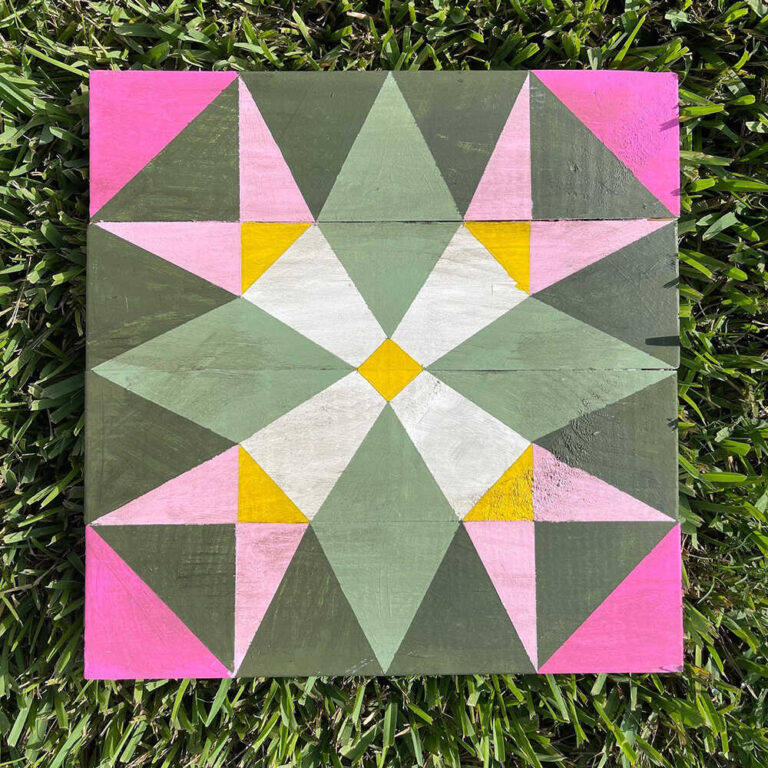
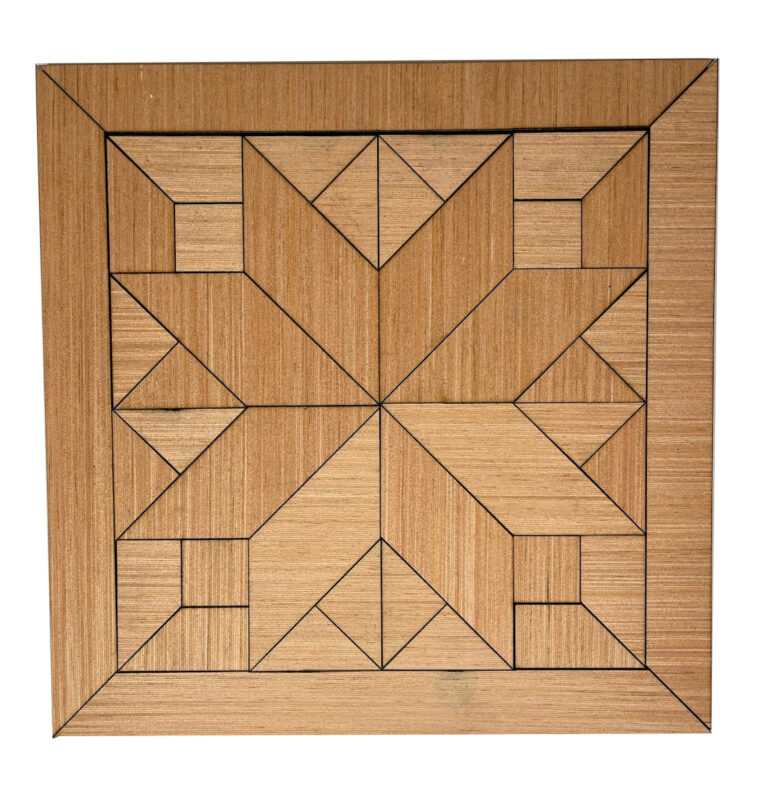
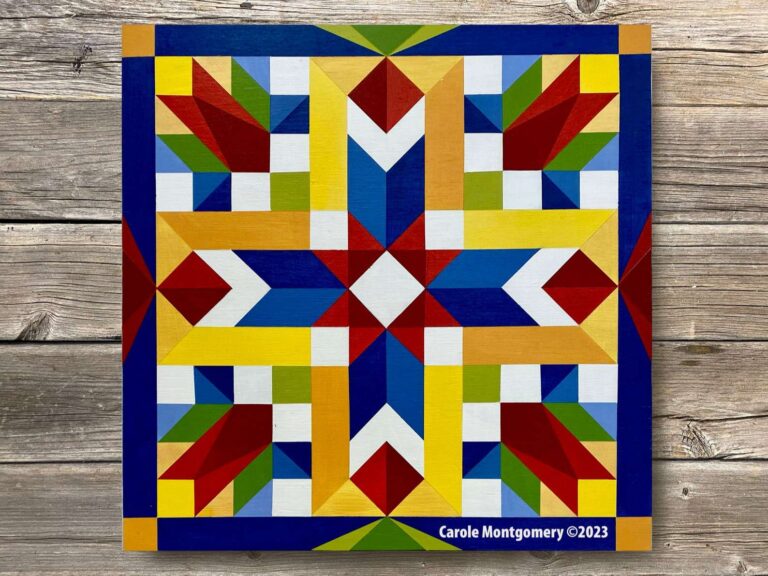
Choosing the right barn quilt pattern is the decision that determines how your finished piece will look for the next ten to twenty years. Get it right and you have a piece of folk art that perfectly captures your property, your values, and your aesthetic. Get it wrong and you end up with something that feels off every time you look at it.
This guide walks through every factor worth considering – from the practical (viewing distance, skill level, color compatibility with your building) to the personal (meaning, family heritage, regional tradition). By the end you will know exactly how to choose a barn quilt pattern that is right for your situation.
1. Consider Where the Barn Quilt Will Be Displayed
Location shapes pattern choice more than anything else. The viewing distance from road to barn determines how much complexity your pattern can carry before it becomes a visual blur.
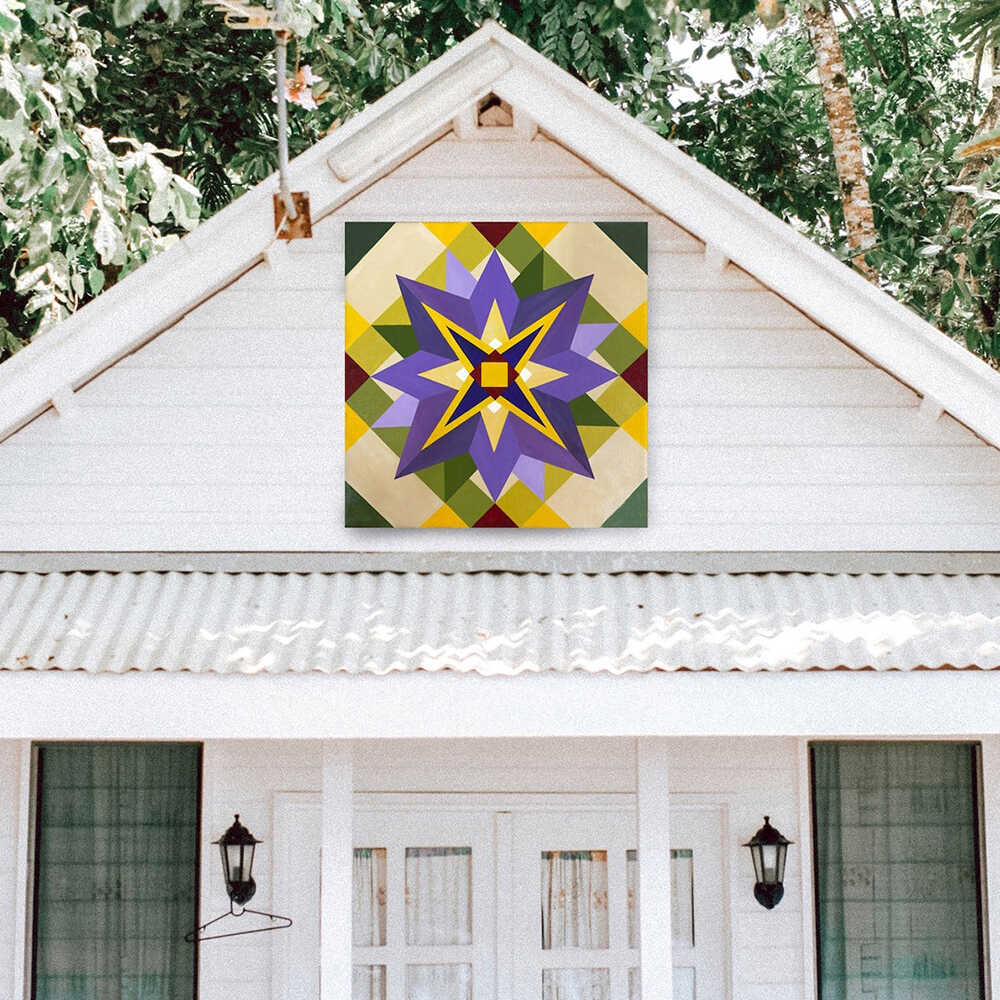
Close viewing (under 50 feet): Detailed patterns with many small pieces work well. Floral designs, interlocking rings, and complex star patterns all read clearly at close range. This includes quilts on fences, porches, garden sheds, and garage doors.
Medium distance (50 to 200 feet): Bold geometric designs with strong contrast work best. Ohio Star, Log Cabin, and Eight-Pointed Star patterns have enough mass to read clearly from across a yard.
Long distance (over 200 feet): Choose a pattern with large, high-contrast color blocks. A simple two-color pinwheel or a bold eight-pointed star in navy and white reads clearly from a quarter mile. Fine detail disappears at this distance – keep it bold and simple.
Also consider the surface orientation. South-facing barn walls get the most sun and should use UV-resistant materials and lighter color palettes that reflect heat rather than absorb it. East and west-facing walls have more moderate light exposure. North-facing walls can use any palette but may appear darker in overcast light.
2. Match the Pattern to Your Skill Level
Be honest about your painting experience before choosing a design. A beautiful, perfectly executed simple pattern always looks better than a rushed, imprecise complex one.
- Beginner – Start with designs that use only straight lines and two to three colors: Nine Patch, simple cross, Log Cabin block, or a four-pointed star. These can be completed in a weekend with no prior painting experience.
- Intermediate – Ohio Star, Eight-Pointed Star, and Flying Geese patterns require accurate 45-degree angles and careful taping but are very achievable with some painting experience.
- Advanced – Double Wedding Ring (curved lines), Grandmother’s Flower Garden (hexagonals), and intricate compass rose designs demand precise curved taping and significant patience.
If you love a complex pattern but are a beginner, bookmark it for your third or fourth project. Start simple, build skill, then attempt the design you are most excited about when you are ready.
3. Think About the Meaning Behind the Pattern
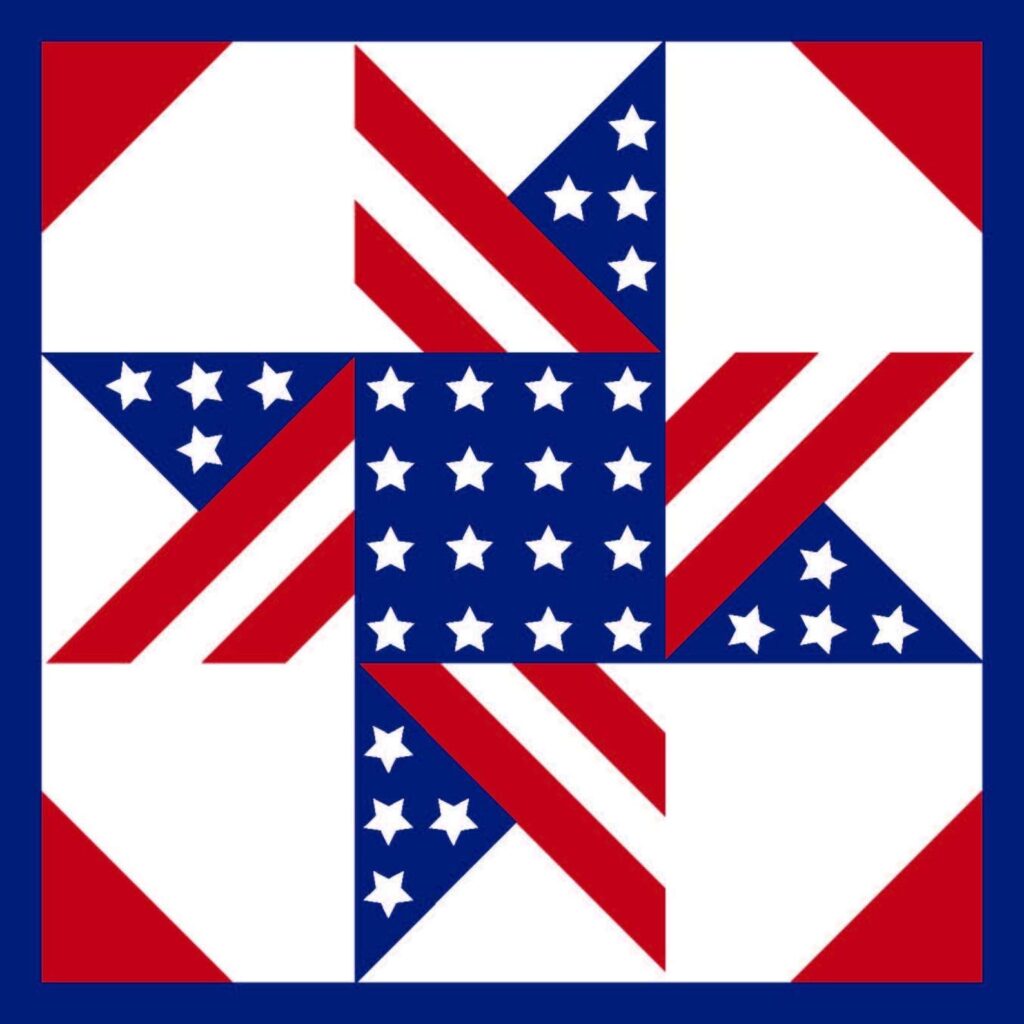
Every traditional barn quilt pattern carries a history of meaning. Choosing a pattern that reflects your values or story gives the finished piece a deeper personal significance.
- Bear Paw – protection, family strength, safe home
- Ohio Star – hope, guidance, community pride
- Log Cabin – family, warmth, generational continuity
- Double Wedding Ring – love, commitment, new beginnings
- Flying Geese – freedom, migration, bold moves
- Lone Star – independence, Texas heritage, self-reliance
- Pinwheel – change, seasons, adaptability
For a complete breakdown of what barn quilt patterns mean, see our guide to barn quilt pattern meanings and symbols.
4. Choose Colors That Work With Your Building
The barn quilt does not exist in isolation – it is framed by the color and texture of the wall behind it. Before choosing paint colors, stand at the spot where the quilt will hang and look at the wall. Ask yourself:
- Does the wall need contrast (a bold, high-contrast quilt on a neutral gray barn) or harmony (warm earth tones on a red barn)?
- What colors are already strong in the landscape – tree greens, soil browns, sky blues – and would the quilt complement or compete with them?
- Is the building color dark or light? Dark barns (deep red, black, dark gray) look best with lighter quilt palettes. Light barns (white, cream, pale gray) can handle bold, saturated quilt colors.
The most universally successful barn quilt color combinations are:
- Navy blue + white + red (classic American folk art)
- Forest green + cream + barn red (traditional farmhouse)
- Black + white + a single accent color (modern, high-contrast)
- Warm earth tones – rust, gold, cream, brown (naturalistic, works on any setting)
5. Consider Regional Tradition
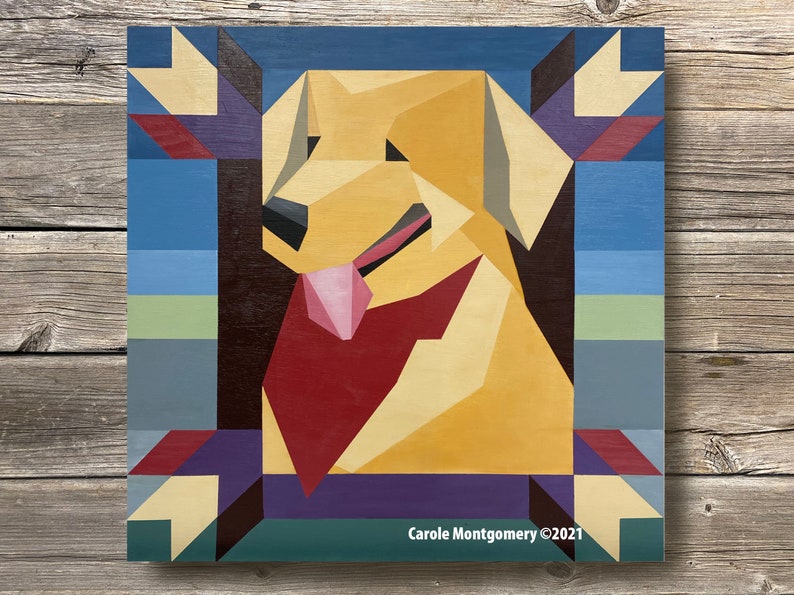
Different regions of the country have developed their own barn quilt traditions, and choosing a pattern associated with your local heritage gives the piece an extra layer of authenticity:
- Ohio and the Midwest: Ohio Star, Log Cabin, Bear Paw, Nine Patch – the patterns that started the barn quilt movement in Adams County, Ohio in the early 2000s.
- Appalachia (VA, WV, KY, TN, NC): Bear’s Paw, Flying Geese, Appalachian Star, mountain-themed designs in earthy Appalachian color palettes.
- Texas and the South: Lone Star, Texas Star, Pinwheel, patriotic designs in red, white, and blue.
- New England: Schoolhouse, Maple Leaf, Double Wedding Ring – reflecting the colonial and craft heritage of the region.
- Pacific Northwest: Cascade Star, Pine Tree, Eagle – designs that reflect the landscape and Native American artistic traditions.
If you live in or near a county that has a barn quilt trail, look up the patterns used in your local trail. Using a design that appears on nearby barns connects your quilt to the broader community art project.
6. Decide on Size Before Pattern
Pattern and size are interdependent decisions. Some patterns require specific proportions to look right – an 8-pointed star needs a square board; a Flying Geese border works best on a rectangular one. Decide your board dimensions first, then choose a pattern that suits those proportions.
Common barn quilt sizes and what they work for:
- 2×2 ft – fence panels, mailbox posts, small shed walls. Best for simple two-color designs.
- 2×4 ft – porch fascia boards, garage doors, small barn walls. Good for rectangular designs like Flying Geese.
- 4×4 ft – the standard barn quilt size for most trails. Works for almost any square pattern.
- 6×6 ft or larger – large barn walls, roadside installations. Requires structural backing support. Use bold, simple designs that read from the road.
For a complete guide to size selection and mounting, see our article on how big a barn quilt should be.
7. Choose a Pattern You Genuinely Love
All the practical considerations above matter. But at the end of the day, you will be looking at this barn quilt for years, possibly decades. Choose something you genuinely love.
Browse our full barn quilt pattern collection – over 200 designs organized by category – until you find one that makes you stop scrolling. That is probably the right pattern for you. Start there, then work backward through the practical questions to confirm it is also the right fit for your location, skill level, and building.
Quick Decision Guide
Still not sure? Use this quick checklist:
- Viewed from more than 100 feet? Choose bold, large-scale designs.
- First-time painter? Choose straight lines only, two to three colors.
- Want to honor family history or community values? Match pattern meaning to your story.
- Dark-colored building? Use lighter quilt palette for contrast.
- In a county with a barn quilt trail? Consider choosing a regional pattern.
- Square board? Almost any traditional barn quilt pattern works. Rectangular board? Use border patterns like Flying Geese or a landscape-oriented design.
There is no wrong answer – only the pattern that feels right when you stand back and imagine it on your wall.